Let's get something out of the way first: there is no body type that looks bad in a wedding dress. We've fitted thousands of brides — literally thousands — and we've never once looked at someone and thought "well, there's nothing here for you." Every single bride has found her dress. Every single one.
That said, understanding how different silhouettes interact with your body can save you a lot of time, tears, and frustration in the fitting room. This isn't about hiding anything. It's about knowing what will make you feel like the most confident version of yourself.
Why Traditional "Body Type Rules" Are Mostly Nonsense
You've probably seen the charts: pear shapes should wear A-line, apple shapes should wear empire waist, hourglass shapes should wear mermaid. The problem with these rules is that they treat bodies like geometry problems instead of actual human beings.
Your body isn't just a shape — it's a combination of proportions, posture, height, comfort level, and personal style. A 5'2" bride and a 5'10" bride who both technically have "pear-shaped" bodies will look completely different in the same dress. The rules don't account for that.
What actually matters is simpler than any chart: How does the dress make you feel when you move in it?
The Real Guide to Silhouettes
A-Line
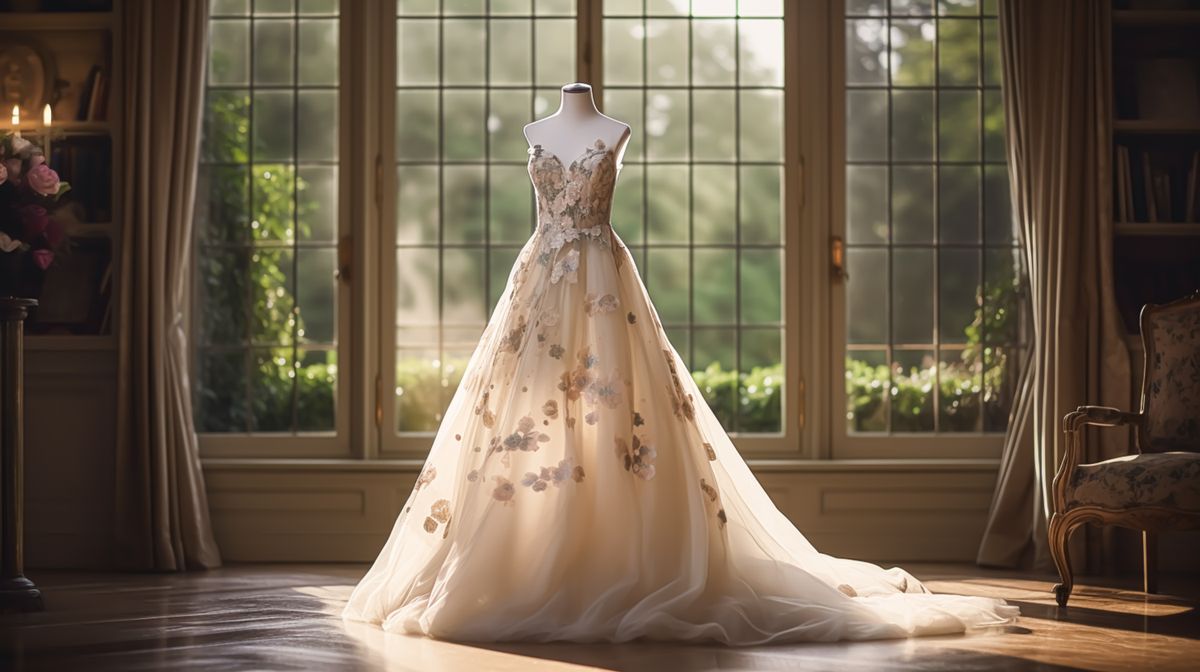
The A-line is the most universally flattering silhouette, and it's universally flattering for a reason that has nothing to do with body type charts. It's structured enough to create a defined waist while flowing away from the body below the hip, which means it's comfortable to walk in, sit in, dance in, and hug your grandma in.
Best for: Brides who want to feel polished without feeling restricted. Also great if you're undecided — it's a safe starting point for your first appointment.
Watch out for: Fabric weight matters enormously with A-lines. A heavy satin A-line will drape differently than a lightweight tulle one. Try both before deciding.
Ballgown
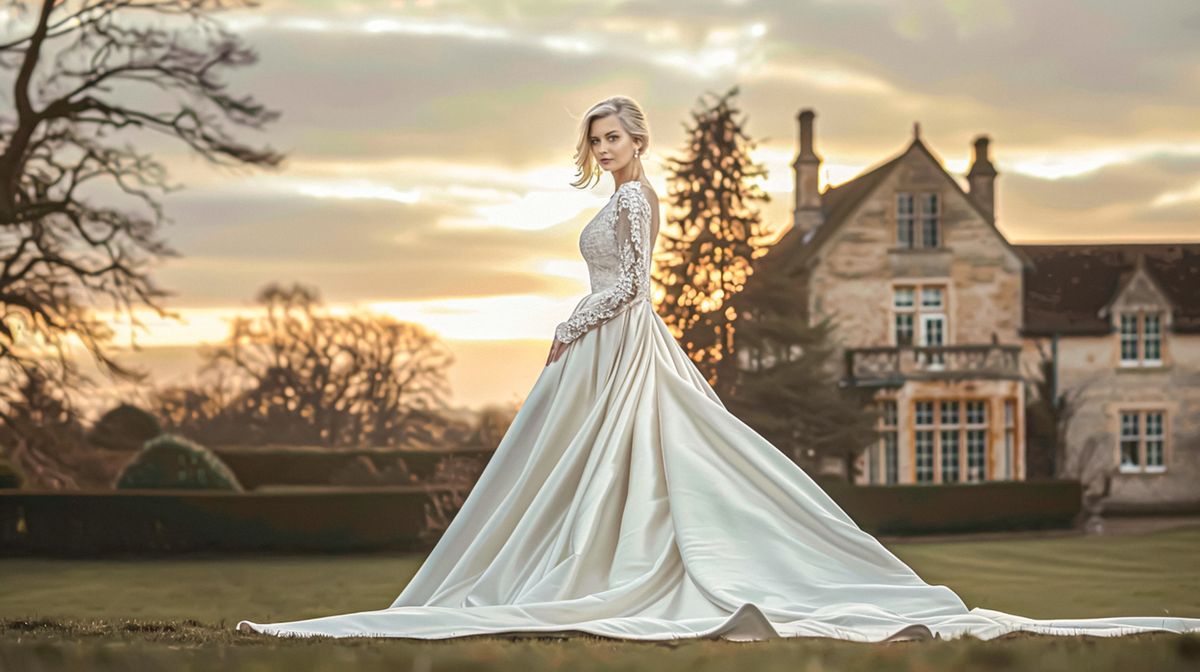
The ballgown is pure drama — fitted bodice, full skirt, all the volume. It creates an hourglass silhouette on virtually everyone because the proportions do the work for you.
Best for: Brides who want the full fairy-tale moment. Also surprisingly great for brides who are self-conscious about their hips or lower body — the skirt volume creates a visual balance that takes focus upward.
Watch out for: Venue logistics. Ballgowns in small spaces are a battle. Also, try sitting in one before you commit. You'll be sitting for dinner, in a car, and (hopefully) at some point resting your feet.
Mermaid / Trumpet
These two get grouped together but they're different. A mermaid flares at or below the knee. A trumpet flares at mid-thigh. That difference changes everything about how the dress feels to wear.
Best for: Brides who want to show off their curves. Both silhouettes hug through the hips and thighs, so you need to genuinely love how your body looks in something fitted. If you're going to spend the whole night tugging and adjusting, it's not your dress — no matter how good it looks in the mirror.
Watch out for: Walking. Seriously, walk around the entire salon in it. Go up a step. Sit down. A dress that looks incredible standing still but makes you waddle down the aisle isn't the one.
Sheath / Column
Sleek, minimal, and modern. The sheath follows your natural body line from top to bottom without a defined waist or flare.
Best for: Brides who lean toward simplicity. This silhouette is stunning on taller frames but works on any height with the right proportions and fabric. It's also the best silhouette for showcasing incredible fabric — think crepe, silk charmeuse, or heavy mikado.
Watch out for: Undergarments. There's nowhere to hide in a sheath, so invest in seamless, well-fitted undergarments. We also strongly recommend shapewear — not to change your shape, but to create a smooth line under the fabric.
Empire Waist
The waistline sits just under the bust, with fabric flowing straight down. Think Greek goddess energy.
Best for: Brides who want to de-emphasize their midsection, or brides who are pregnant and want something comfortable that still feels bridal. Also surprisingly gorgeous on petite brides — the high waistline elongates the legs visually.
Watch out for: Proportions. An empire waist that sits too high or too low will look off. Your consultant should pin it precisely during the appointment.
What to Actually Focus On in the Fitting Room
Forget what the dress looks like on the hanger or on the model in the photo. Focus on these five things when it's on your body:
- Can you breathe? Not "can you survive" — can you actually take a deep breath, eat dinner, and dance without feeling like you're in a corset from 1850?
- Can you move your arms? Raise them above your head. You're going to do a bouquet toss. You're going to hug people. You're going to wave at the camera.
- How does it photograph? Ask someone to take a photo from across the room. Dresses look different from 10 feet away than they do in a mirror 3 feet in front of you.
- What do you notice first? When you look in the mirror, do you see yourself — or do you see the dress? The right dress makes you look like a better version of you, not like a bride costume.
- Are you smiling? This sounds cheesy, but it's the most reliable test we've ever seen. When you put on the right dress, you can't help it. Your whole face changes.
A Note on Alterations
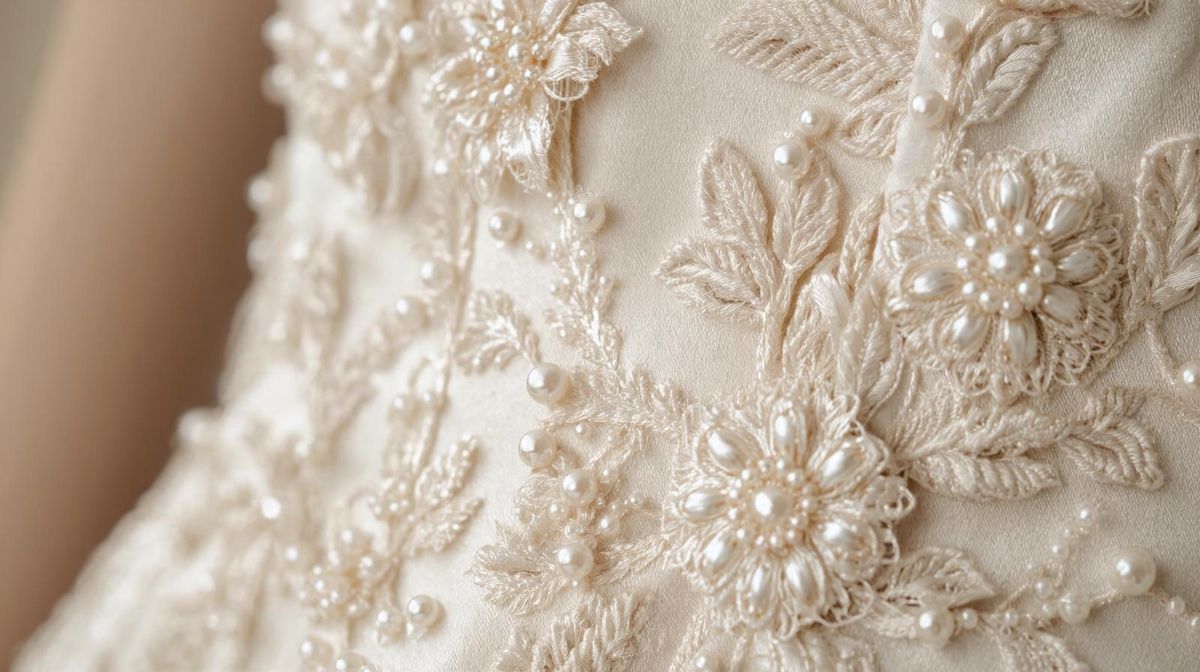
Almost no dress fits perfectly off the rack — and it's not supposed to. Alterations are where a good dress becomes your dress. Budget between $300 and $800 for alterations depending on complexity, and make sure you've had your final fitting no more than two weeks before the wedding.
The most common alterations are hemming, taking in or letting out at the bust and waist, and bustle construction. These are routine. What's not routine is trying to fundamentally change a dress's structure — if you're looking at a dress thinking "it would be perfect if we just changed the neckline, added sleeves, and removed the train," that's not your dress.
"The right dress feels like a relief. Like you can finally stop looking. If you feel that, trust it."
Stop Googling "best dress for my body type" and start paying attention to how you feel. Your body already knows. You just have to listen to it.